


Advent
Transparent aligners had been advanced as an esthetic selection to mounted equipment remedy. At the beginning, they functioned by means of the “form molding impact” wherein a sequence of aligners was once created to mirror an incremental rearrangement of tooth from the malocclusion to the required result.1,2,3 It turned into obvious {that a} plastic tray on my own didn’t supply enough traction at the tooth for all required actions.4 For instance, incisor extrusion and bicuspid rotation are tricky actions for aligners, owing to a loss of herbal undercuts. Attachments, or cured shapes of composite bonded at once to the tooth, had been advanced to offer further pushing surfaces for those actions and for aligner retention.
To shape typical aligner attachments, a clinician fills the wells in an attachment template with a composite resin (Determine 1a). The clinician then puts the template at the affected person’s arch and lightweight remedies the composite subject material. Typical attachment templates are in most cases thermoformed on a 3-d published style, taking into account quite a lot of attachment dimensions and shapes. The process’s shortcoming is in its method sensitivity, difficult by means of difficulties in doling out the perfect quantity of composite resin into the attachment template.
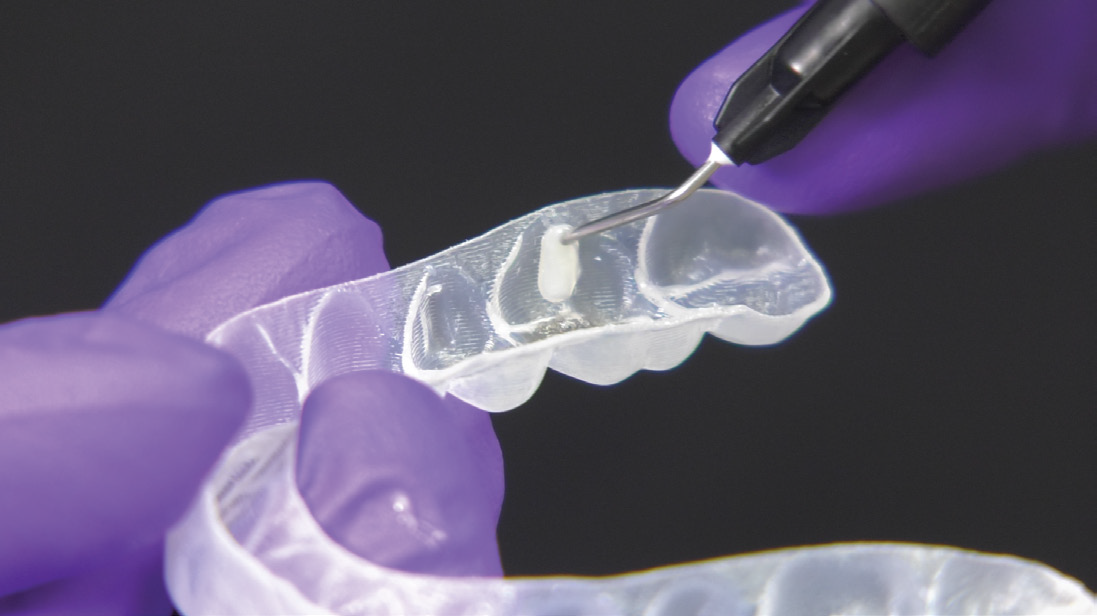
Determine 1: (a) Methodology-sensitive, guide filling of an attachment template smartly, and
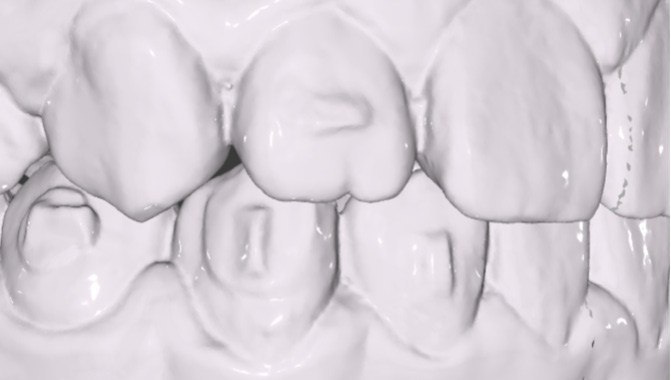
(b) not unusual high quality demanding situations with typical composite aligner attachments.
Underfilling the wells in an attachment template will increase the danger of bond failure or growing an undersized attachment, as proven in Determine 1b. Overfilling the wells may end up in the formation of important quantities of composite flash across the attachments. Optimum template-filling method may also be tricky to grasp, and, in follow, many attachments are poorly shaped.
Readability™ Precision Grip Attachments had been advanced to mitigate the method sensitivity of the attachment introduction process and to translate the virtual precision of the remedy plan to medical scenarios. Discrepancies between typical attachments and the remedy plan come with voids, flash, quantity and positional mistakes.5,6
Readability Precision Grip Attachments cope with those issues. They’re actual, 3-d published attachments with bonding surfaces custom designed to the contours of each and every teeth (Determine 2a). The pre-cured Readability Precision Grip Attachments are delivered by means of an attachment tray (Determine 2a) and the bonding process ends up in no composite flash. The one last flash chance comes from the skinny layers of unfilled bonding agent used to safe the attachments to the tooth.
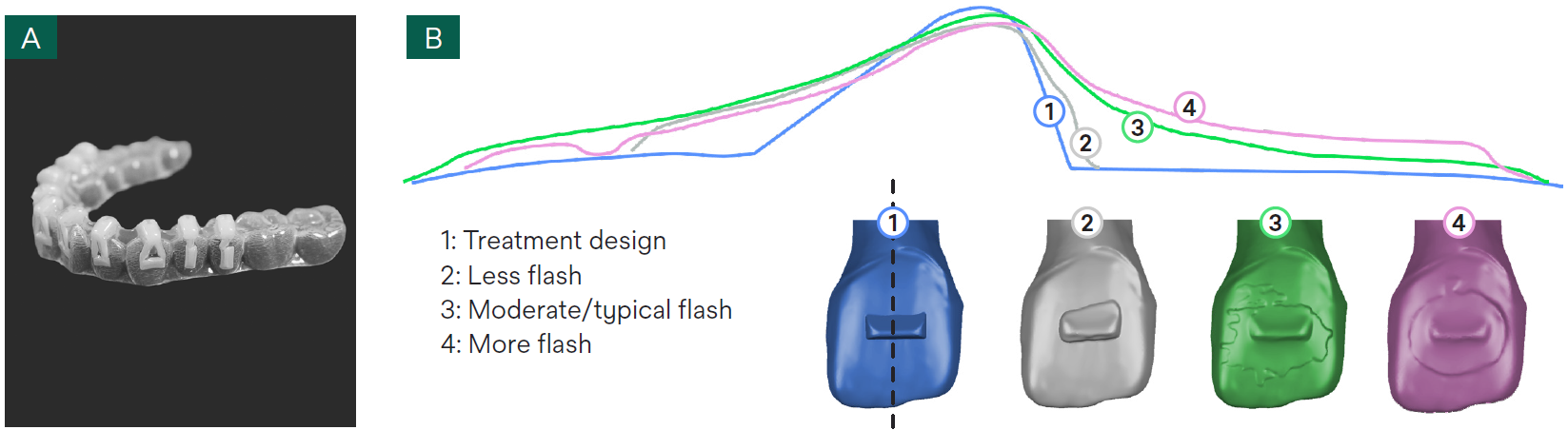
Determine 2: (a) 3-d published Readability Precision Grip Attachments captured within the attachment tray, and (b) Instance cross-sectional UL1 profiles evaluating the remedy design attachment to scans of a standard attachment at the similar teeth (bonded on separate events).
Given the difference in bonding procedures and the propensity for ensuing flash, this learn about was once initiated to quantify the flash thickness in most cases skilled with typical and Readability Precision Grip Attachments and exhibit its penalties on aligner engagement and forces dropped at tooth thru finite part modeling. To strengthen this goal, a sequence of medical instances had been decided on and analyzed.


