

:sharpen(level=0):output(format=jpeg)/up/dt/2025/02/Optimising-intra-and-extraoral-substrates-for-maximal-adhesive-potential.jpg?ssl=1 "Optimising intra- and extraoral substrates for maximal adhes")
Each intaglio and becoming surfaces may also be infected through more than a few brokers to the detriment of the recovery’s diagnosis. Probably the most intrinsic contaminants to be regarded as are moisture from exhalation, ambient humidity within the oral hollow space, blood and saliva.
Moisture is really helpful handiest when in moderation managed all the way through the dentine penetration segment of substrate priming for adhesion. Alternatively, over the top moisture can intervene with the hybridisation procedure on the interface, compromising adhesion high quality. Blood and saliva are ubiquitous in restorative dentistry and perfect managed by means of the appliance of a dental dam.
Moreover, the particulate deposition of dentine and teeth all the way through same old teeth preparation will have to even be regarded as. This smear layer stays at the dentinal floor and frequently occludes the dentinal tubules and will have to thus be got rid of for a hit bonding to the hydroxyapatite and collagen fibrils of the outside.
Contamination of the ready floor too can happen via extrinsic contaminants, akin to provisional cement carried out by means of a two-stage oblique supply method. Haemostatic brokers akin to ferric sulphate and aluminium chloride can deposit insoluble precipitates at the floor of the teeth which are handiest in part detachable with a 33% phosphoric acid resolution. General, the ensuing possibility of adhesive compromise or—within the worst case—failure, is top.
Intrinsic contaminants
Moisture is a essential part for maximising the adhesive bond power of positive fashionable common adhesives. The presence of moisture permits for higher penetration of bonding answers into dentinal tubules and between collagen fibrils, in the end bolstering the resilience of the hybrid layer.1
Van Meerbeek et al. reported that one-step fresh common adhesives require water as an ionisation medium for the self-etching response; then again, those adhesives had been discovered to shape interfaces semi-permeable to fluid.2 Given this and that HEMA has a top affinity for water, one-step adhesives containing HEMA building up the danger of hydrolytic degradation of the hybrid layer. Van Meerbeek et al. thus prompt that evaporating water from the interfacial surfaces would possibly maximise bond power.
Pereira et al. examined the impact of various levels of wetness of the dentinal substrate on bond power, evaluating more than a few drying strategies, together with using quick vs. lengthy air blasts, rainy vs. dry cotton pellets or a micro-brush, towards leaving the outside overwet.3 In all teams, the wettest dentinal floor resulted within the lowest shear bond power.
Right through the cementation of an oblique recovery, each salivary and blood contamination of the bonding surfaces had been proven to have a unfavourable impact on bond power.4 That is because of the deposition of salivary glycoprotein at the floor and macromolecules akin to fibrinogen and blood platelets blockading get admission to to the tubules for efficient bonding. Blood contamination has constantly been discovered to be extra deleterious to bond power when compared with saliva.4
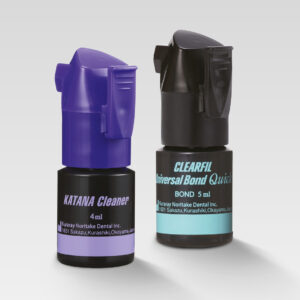
Salivary contamination of polycrystalline ceramic and steel alloy restorations upon try-in may also be got rid of by means of steam cleansing and air abrasion set at 250 kPa for 15 seconds.5 Phosphoric acid is frequently mistakenly carried out as a cleansing agent to the intaglio floor. In polycrystalline ceramics akin to tetragonal zirconia polycrystal, this may considerably compromise bond power, as phosphates will bond tightly to the loose websites to which the 10-MDP monomer generally bonds as a part of the APC protocol of zirconia bonding.6 Two research of contemporary floor cleaners demonstrated a hit debridement of the outside the usage of KATANA Cleaner (Kuraray Noritake Dental), an MDP-based surfactant, for each blood- and saliva-contaminated substrates.7, 8
On dentine that had up to now been etched and infected with blood and saliva, the following utility of 37.5% phosphoric acid has been proven to give you the best restoration of shear bond power.9 A find out about at the nanomechanical houses and nano-roughness of dentine etched with phosphoric acid and dentine handled with a self-etching adhesive, each infected with saliva, discovered that the KATANA Cleaner used to be in a position to restoring those surfaces to the unique values of untreated dentine.10 On smear layer-affected dentine, chlorhexidine has constantly proven higher effects than different brokers, akin to ethanol, EDTA and aloe vera, have in setting up the best shear bond power to dentine.
Artificial workflow contaminants
Marfenko et al. demonstrated that salivary contamination of the intaglio floor of lithium disilicate restorations led to considerably decrease bond strengths relative to contamination through dental stone from laboratory processes.11 The appliance of a silane coupling agent to the intaglio floor ahead of contamination had a protecting impact at the bond power.
On this regard, it will have to be regarded as that lithium disilicate-based restorations are frequently asked pre-etched with hydrofluoric acid from the laboratory. Incessantly, the case is returned to the clinician at the secondary or number one fashion. If already handled with hydrofluoric acid, the outside may also be regarded as to had been re-contaminated through the stone or resin fashion, or just by natural residues from dealing with. For the reason that it is going to thus comprise components of dental stone, blood and saliva, to not point out haemostatic brokers akin to aluminium chloride and ferric sulphate, the unprotected floor must be decontaminated after the try-in process. If silane coupling brokers are carried out previous to try-in, the query arises of whether or not the intaglio floor used to be in reality contaminant-free after removing from the fashion.
Haemostatic brokers utilized in scientific dentistry showcase a pH of one.1–3.0 and are as acidic as self-etching primers.12 Chaiyabutr and Kois discovered that, when infected with 25% aluminium chloride or 13% ferric sulphate, dentine demonstrated a considerably decrease shear bond power to self-adhesive resin cement and that this used to be considerably recovered the usage of the etch-and-rinse manner.13 KATANA Cleaner used to be discovered to have a favorable impact at the cleansing of dentine infected with aluminium chloride and ferric sulphate.
Since the insoluble precipitate that aluminium chloride leaves at the floor of dentine is handiest in part got rid of when handled with phosphoric acid, this achieves just a partial restoration of shear bond power. The appliance of EDTA has been discovered to revive this bond power to the extent of ordinary dentine.14
CLEARFIL Common Bond Fast.
Provisional cements are idea to have a deleterious impact at the shear bond power of adhesively bonded oblique ceramic restorations. Ding et al. reported that use of resin-based and non-zinc oxide eugenol cements within the provisional segment diminished the bond power and that using calcium hydroxide and polycarboxylate cements exhibited appropriate metrics.15 Debridement of the ready floor with air abrasion led to restoration of diminished bond values. Similarly helpful used to be the appliance of instant dentine sealing.16 This system is characterized through air abrasion ahead of adhesive bonding and the appliance of a resin coating, occluding each the dentinal tubules and setting apart the oxygen inhibition layer and permitting the resin–dentine bond to mature and fortify within the absence of stresses. This manner is valuable in minimising postoperative hypersensitive reaction and bacterial ingress and in optimising the shear bond power, specifically when oblique ceramic restorations are involved.17 Hardan et al. discovered that the shear bond power used to be best when instant dentine sealing used to be finished the usage of a three-step etch-and-rinse adhesive protocol.16
The bonding of dentinal substrate infected with root canal sealers is a priority for the integrity of core build-ups after endodontic remedy. Tian et al. discovered using KATANA Cleaner to be most often awesome to 70% ethanol within the removing of a sealer in accordance with zinc oxide eugenol and to accomplish similarly to 70% ethanol within the removing of an epoxy resin-based sealer.18
Medical case demonstration
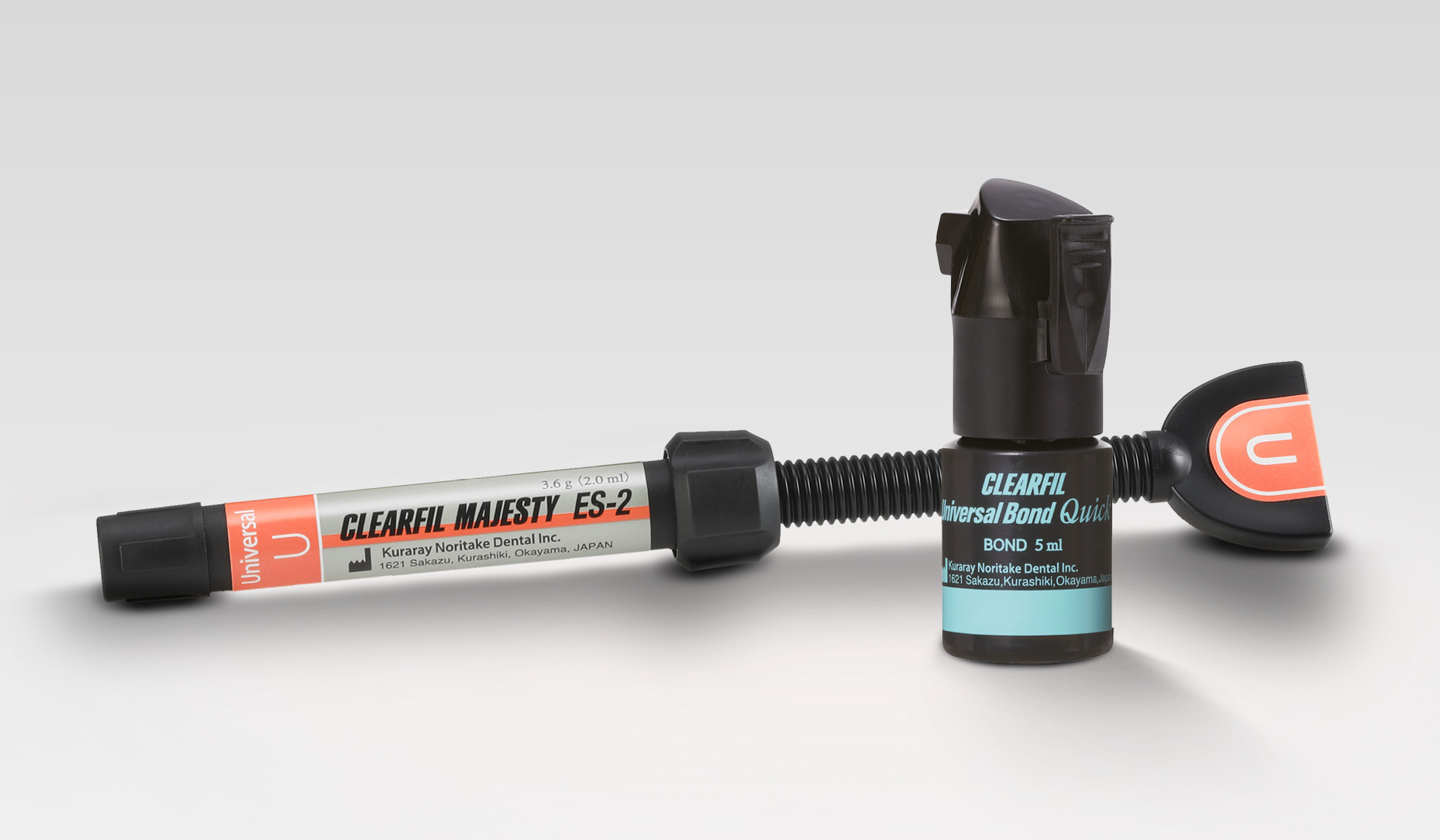
Fig. 1
A 35-year-old feminine affected person (ASA Elegance I) introduced to the observe with a couple of failing composite restorations within the maxillary left quadrant that have been deliberate for substitute. Previous to the supply of topical and native anaesthesia, this can be a not unusual process within the observe to establish color specifics of deliberate restorations ahead of dehydration impacts the optical houses of the herbal teeth. Sensible monochromatic composites (Fig. 1) are a category of direct restorative fabrics that leverage the facility in their nano-filler composition and refractive index to imitate the structural colour of the encompassing teeth and dentin.19 This usually permits a clinician to have a simplified variety of sunglasses readily available.
Two cartridges of two% lidocaine with 1:100,000 adrenaline have been delivered by means of buccal infiltration ahead of absolute isolation used to be completed the usage of a non-latex dental dam (Isodam HD, Heavy; 4D Rubber; Fig. 2). The outdated restorations have been excavated in conjunction with caries (Fig. 3), and the dentinal construction assessed for residual decay with a detector dye (CARIES DETECTOR, Kuraray Noritake Dental). The preparation cavosurface margins have been gently bevelled ahead of floor remedy with air abrasion (206.84 kPa; 29 μm aluminium oxide in a 17.5% ethanol provider; AquaCare, Velopex World; Fig. 4). The teeth margins have been etched with 33% phosphoric acid and rinsed (Fig. 5). The preparation surfaces have been additional decontaminated of any residual smear layer or powder residue the usage of KATANA Cleaner (Fig. 6). A single-step self-etching common adhesive used to be carried out to the preparation in keeping with the producer’s directions and air thinned ahead of mild polymerisation (Fig. 7).


:sharpen(level=0):output(format=jpeg)/up/dt/2025/02/Optimising-intra-and-extraoral-substrates-for-maximal-adhesive-potential.jpg?ssl=1&description=Optimising%20intra-%20and%20extraoral%20substrates%20for%20maximal%20adhes)