


Periodontitis stays a significant international well being problem, says Varkha Rattu, however higher results rely on consensus in analysis, collaboration round referral and transparent communique with sufferers.
Periodontitis is the 6th maximum prevalent well being situation globally. In step with the International Burden of Illness find out about (2017), serious periodontitis impacts roughly 11% of the sector’s inhabitants – round 743 million other people – whilst milder bureaucracy have an effect on greater than part of all adults (The Economist Intelligence Unit, 2021). The worldwide occurrence of serious periodontitis exceeds that of heart problems (7%), making it a public well being problem that calls for critical scientific consideration.
Bridging the distance between proof and apply calls for 3 issues: Consensus on how we diagnose and classify illness; Collaboration in recognising when circumstances want specialist enter; and Co-operation in speaking successfully with sufferers and co-workers.
Phase one: consensus
Diagnosing and classifying periodontitis
In periodontology, consensus takes the type of across the world agreed classification techniques and scientific apply tips – the root of excellent scientific decision-making.
Analysis is underpinned via standards established via the Ecu Federation of Periodontology (EFP, 2019).
As soon as showed, staging and grading characterises severity, complexity, and fee of development. The 2017 International Workshop Classification (WWC) offered complexity components that shift a case to the next degree (Papapanou et al, 2019). For instance, furcation involvement Magnificence II or III, probing depths ≥6 mm, and vertical bone loss ≥3 mm escalate from Degree II to Degree III.
Those complexity components are particularly helpful as a result of they determine which scientific options are in all probability to make remedy extra difficult, and due to this fact much more likely to warrant specialist enter.
Phase two: collaboration
Complexity components as a framework for referral
From scientific revel in, the next complexity components will have to instructed critical attention of referral following preliminary non-surgical periodontal treatment (NSPT):
1. Residual probing depths ≥6 mm
Subgingival instrumentation is the cornerstone of energetic periodontal remedy. The place residual wallet of ≥6 mm persist following NSPT, this alerts the will for extra complex intervention. The EFP S3 tenet showed that hand and powered tools will also be utilised successfully, and adjunctive measures akin to systemic antibiotics could also be regarded as in explicit classes akin to generalised Degree III/IV periodontitis in more youthful adults (Sanz et al, 2020).
2. Vertical/Infrabony Defects ≥3 mm
Angular bony defects lift important prognostic weight. Papapanou and Wennström (1991) discovered that deep intrabony defects have been related to 68% enamel loss at 10 years, when put next with 13% for horizontal bone loss (Papapanou, 1991). The EFP S3 tenet provides a robust advice for periodontal regenerative surgical procedure at residual deep wallet with intrabony defects ≥3 mm, supported via 22 RCTs in 1,182 enamel (Sanz et al, 2020). Ways come with barrier membranes and teeth matrix spinoff, with papilla preservation flaps strongly really useful.
3. Furcation Involvement Magnificence II and III
Furcation involvement isn’t, in itself, a explanation why for extraction (Sanz et al, 2020). For mandibular Magnificence II furcation, regenerative surgical procedure carries a robust advice supported via 17 RCTs in 493 sufferers. For maxillary buccal Magnificence II, regeneration is usually recommended. Whilst for Magnificence III shows, tunnelling, root separation, or root resection could also be regarded as.
4. Advanced rehabilitation necessities (masticatory disorder, secondary occlusal trauma, serious ridge defects, chunk cave in, drifting or flaring, fewer than 20 last enamel)
Secondary occlusal trauma – occlusal overload within the context of decreased periodontal strengthen – is a Degree IV complexity issue. Transient splinting and/or selective occlusal adjustment could also be regarded as all the way through treatment (Sanz et al, 2020), and circumstances of Grade 2 mobility with fremitus will also be effectively stabilised via focused occlusal adjustment, fending off extraction.
Ridge defects (Siebert Magnificence I–III) constitute an additional indication for specialist involvement, specifically the place implant rehabilitation is deliberate. Horizontal augmentation choices come with GBR, ridge splitting, and onlay grafts (Naenni et al, 2019). Vertical augmentation encompasses GBR, distraction osteogenesis, onlay block grafts, and sinus ground augmentation (City et al, 2019).
Phase 3: co-operation
The general pillar considerations communique: with sufferers and with colleagues. Proof-based care is handiest efficient if sufferers perceive and settle for the pathway presented.
When explaining the will for referral, language issues, and serving to sufferers perceive the systemic measurement is similarly treasured. Periodontitis is an immune-inflammatory situation – the frame’s reaction to chronic bacterial problem. The inflammatory mediators generated within the periodontium can shuttle systemically, with established associations between periodontitis and diabetes, heart problems, rheumatoid arthritis, and Alzheimer’s illness. Framing the mouth because the gateway to the frame – and periodontal remedy as an funding in general well being – can meaningfully shift affected person engagement.
Taking those components into account, managing periodontitis successfully calls for:
- Consensus: making use of across the world agreed diagnostic standards and classification techniques conscientiously in each and every affected person come across
- Collaboration: recognising the complexity components in all probability to warrant referral, and performing on them decisively
- Co-operation: speaking brazenly with sufferers, framing complex care as an funding of their long-term well being.
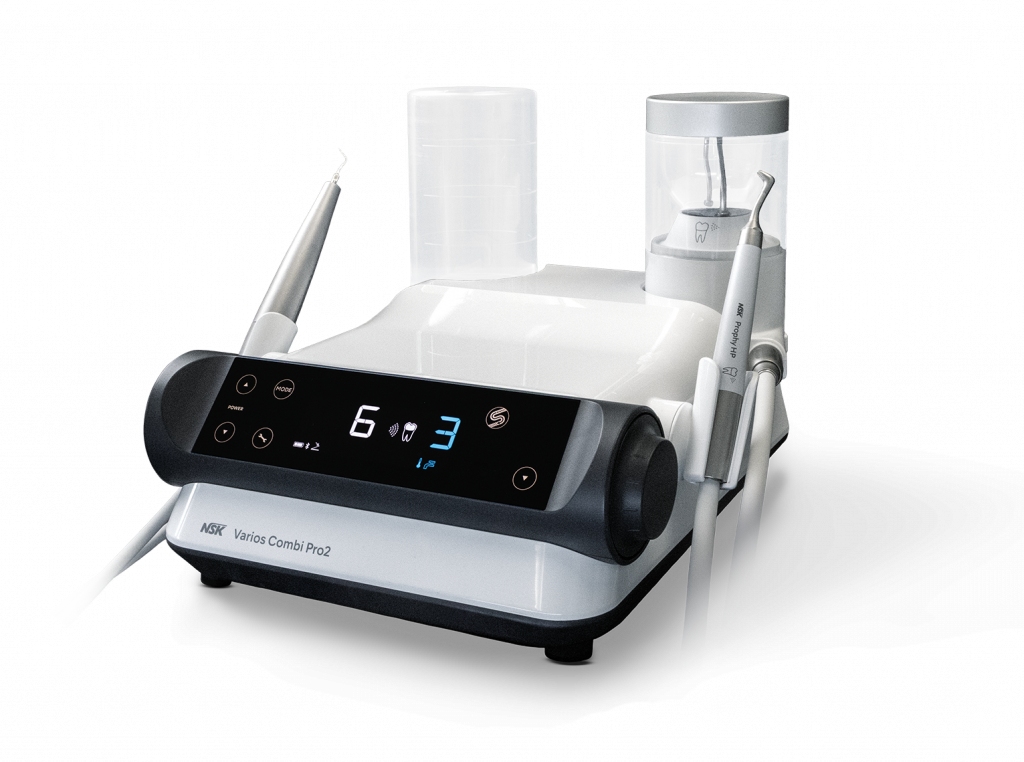
Advances in ultrasonic instrumentation proceed to strengthen extra environment friendly and predictable periodontal remedy. Gadgets such because the NSK Varios Combi Pro2 constitute the evolution of this generation – combining ultrasonic and powder treatment in one unit – and are an instance of the way thoughtfully built-in instrumentation can supplement robust scientific frameworks to beef up affected person results.
Periodontitis stays a illness of important international public well being affect. With the correct scientific framework, dental pros at each and every stage are higher positioned to beef up results for this affected person team.
References
1. The Economist Intelligence Unit. Time to take gum illness critically: The societal and financial affect of periodontitis. Record commissioned via the Ecu Federation of Periodontology, 2021.
2. Steering for clinicians: Periodontitis: scientific resolution tree for staging and grading, Ecu Federation of Periodontology (2019).
3. Papapanou, P. N., Sanz, M., Buduneli, N., et al. (2018). Periodontitis: Consensus record of workgroup 2 of the 2017 International Workshop at the Classification of Periodontal and Peri-Implant Illnesses and Stipulations. Magazine of scientific periodontology, 45 Suppl 20, S162–S170. https://doi.org/10.1111/jcpe.12946
4. Sanz, M., Herrera, D., Kebschull, M., Chapple, I., Jepsen, S., Berglundh, T., Sculean, A., Tonetti, M. S., & EFP Workshop Individuals and Methodological Specialists (2020). Remedy of degree I-III periodontitis-The EFP S3 stage scientific apply tenet. Magazine of scientific periodontology, 47 Suppl 22(Suppl 22), 4–60. https://doi.org/10.1111/jcpe.13290
5. Papapanou PN, Wennström JL. The angular bony defect as indicator of additional alveolar bone loss. J Clin Periodontol. 1991 Might;18(5):317-22. doi: 10.1111/j.1600-051x.1991.tb00435.x. PMID: 2066446.
6. Naenni, N., Lim, H. C., Papageorgiou, S. N., & Hämmerle, C. H. F. (2019). Efficacy of lateral bone augmentation previous to implant placement: A scientific evaluate and meta-analysis. Magazine of scientific periodontology, 46 Suppl 21, 287–306. https://doi.org/10.1111/jcpe.13052
7. City, I. A., Montero, E., Monje, A., & Sanz-Sánchez, I. (2019). Effectiveness of vertical ridge augmentation interventions: A scientific evaluate and meta-analysis. Magazine of scientific periodontology, 46 Suppl 21, 319–339. https://doi.org/10.1111/jcpe.13061
This text is backed via NSK.


